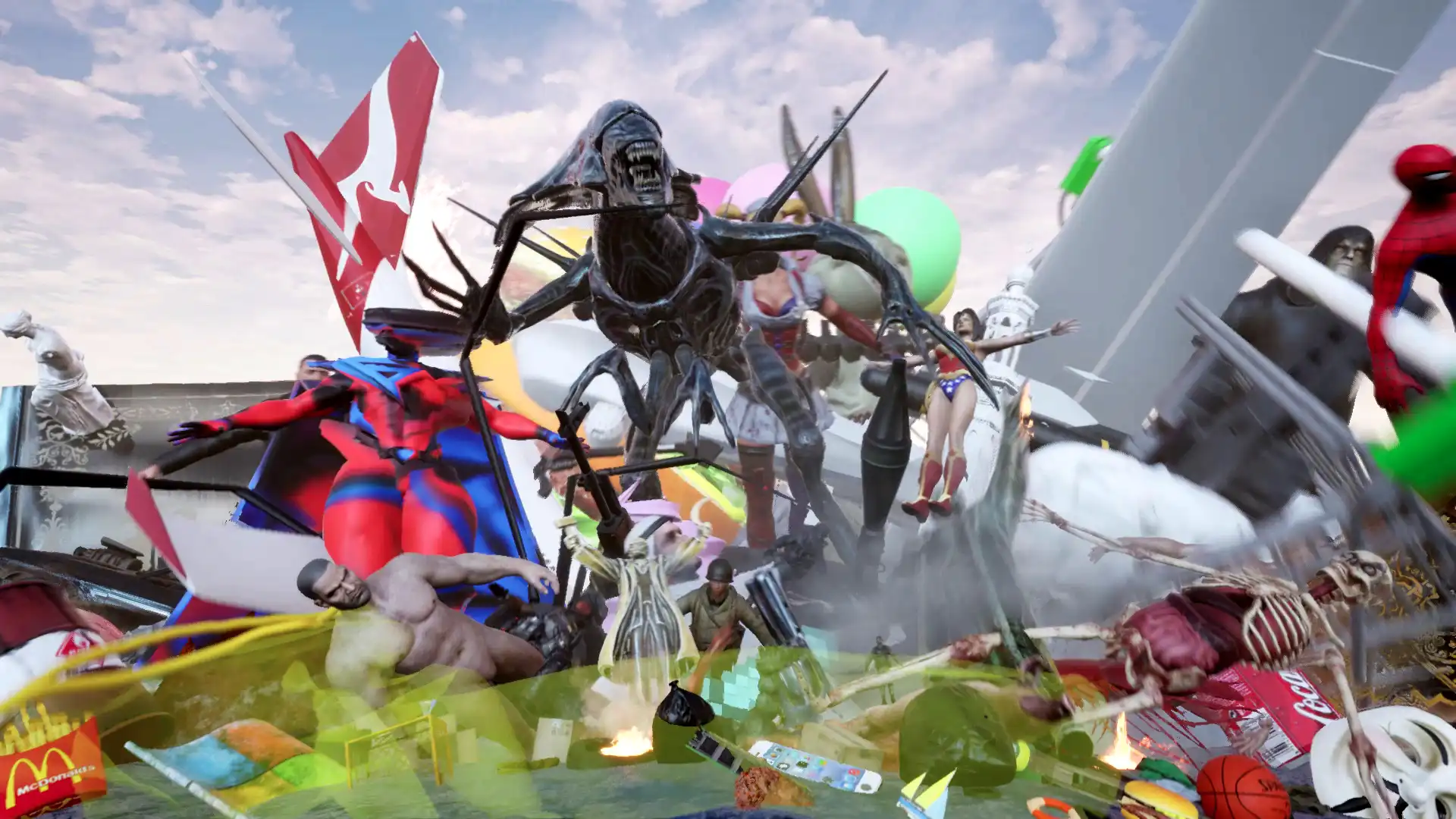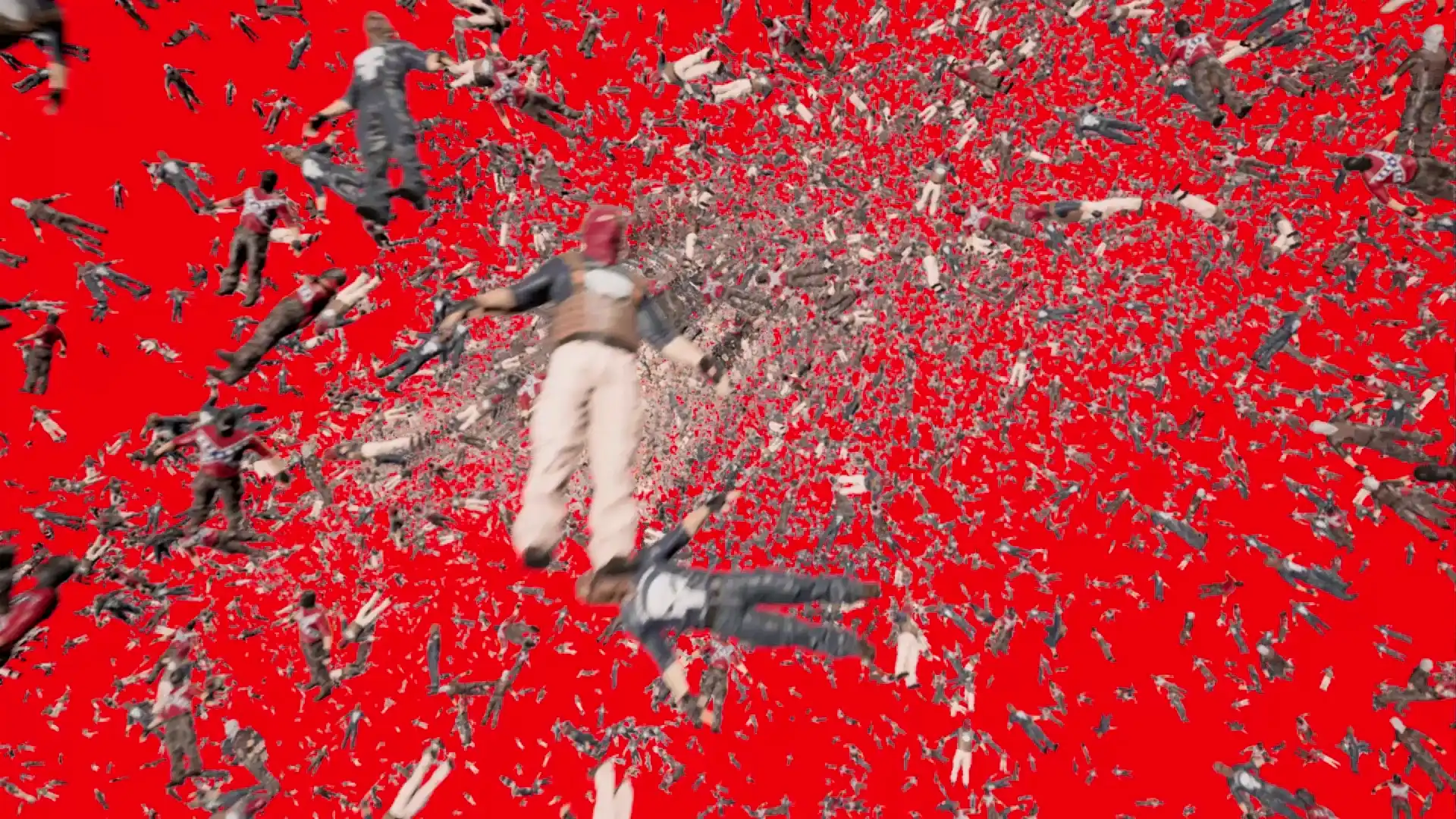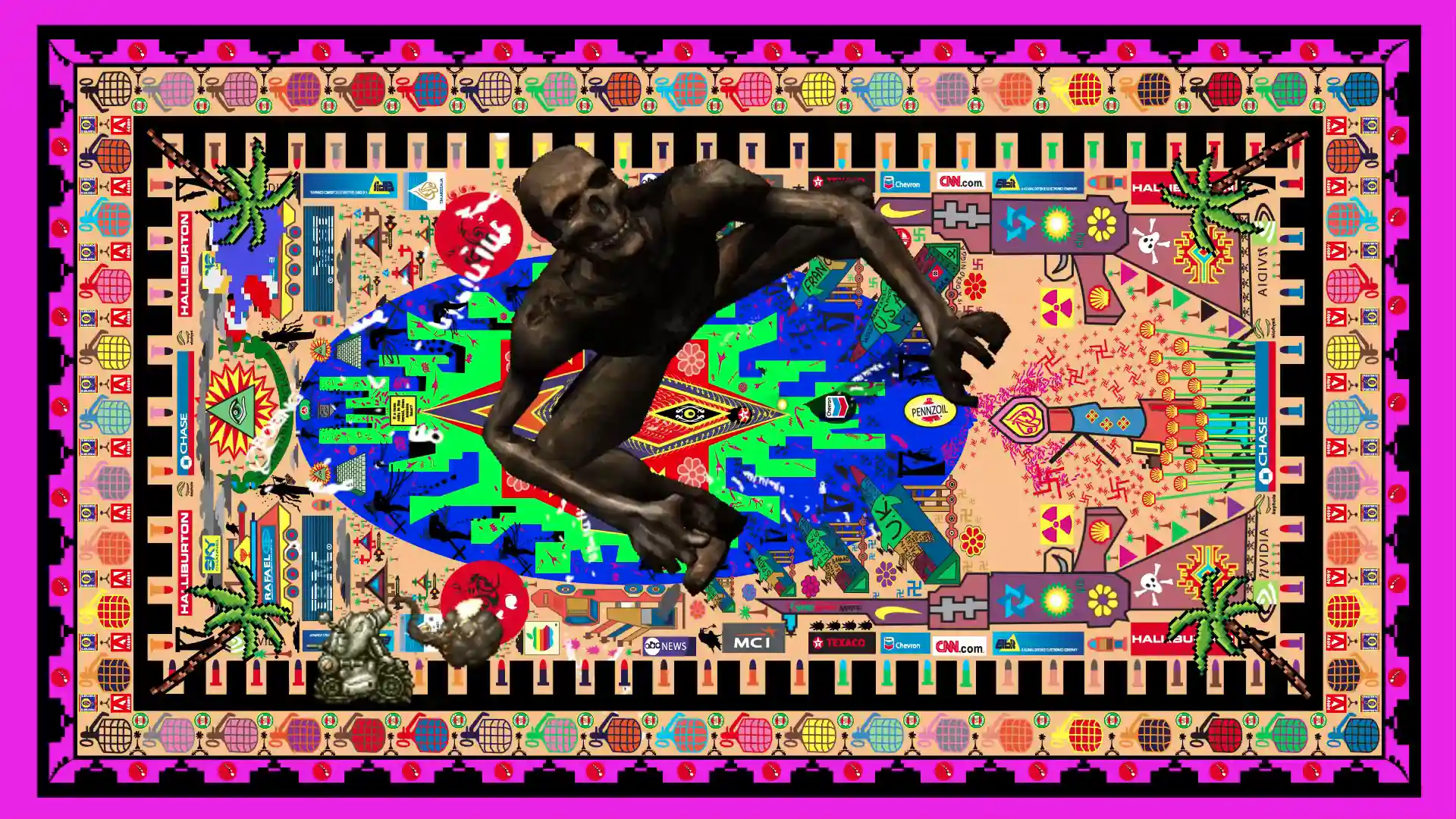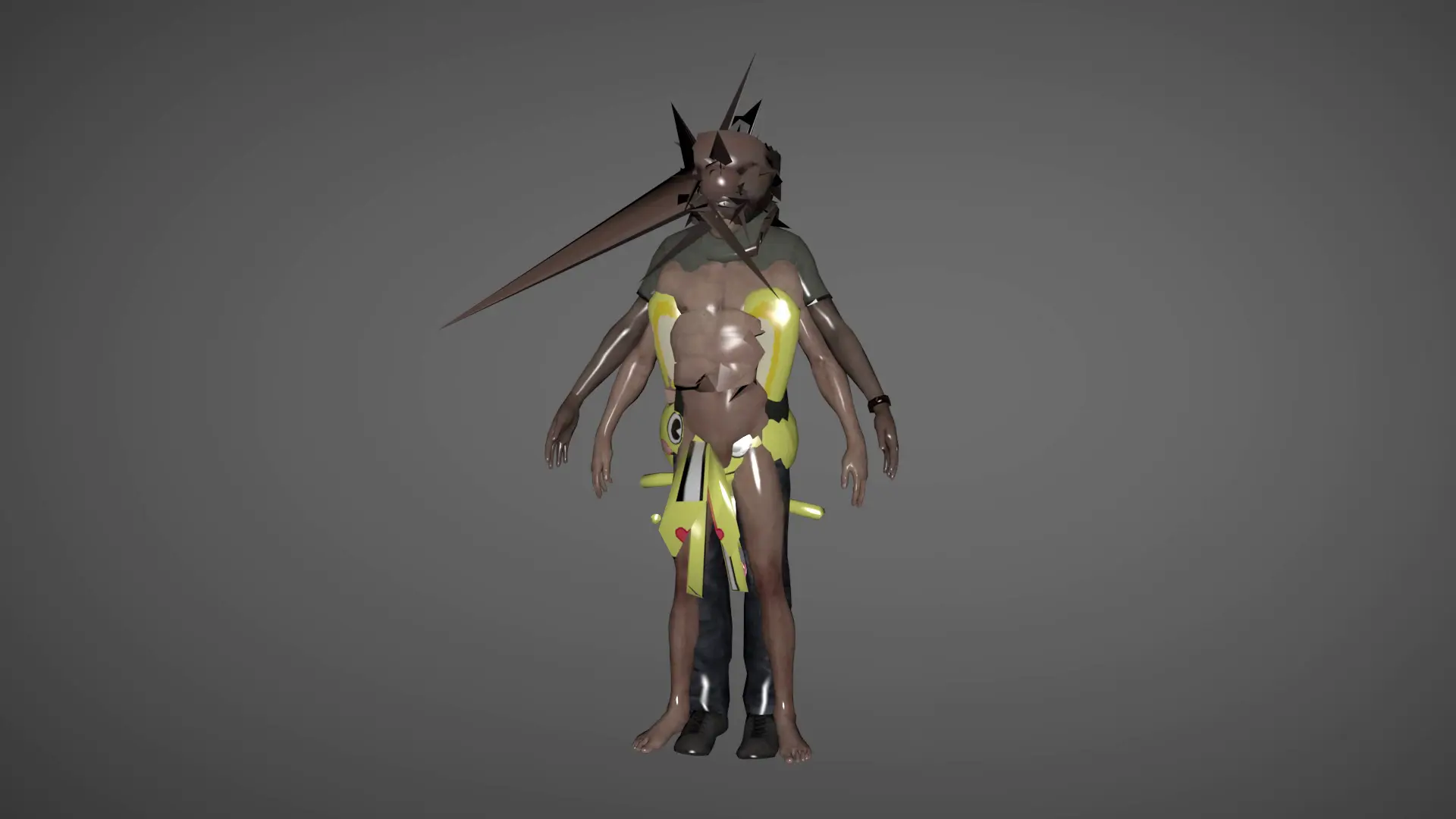
Currently in development, Brisbane Australia 2012.
ARGARMENIA is a series of real-time gaming environments designed both within real and virtual environments that challenge players' ability to problem solve, and develop their imaginations whilst learning how to manipulate narrative structures. Players learn to collaborate and construct an imaginative space that ultimately expands the participants' shared understanding of reality in how meaning is constructed out of history and the bodies that inhabit this temporal space of existence.
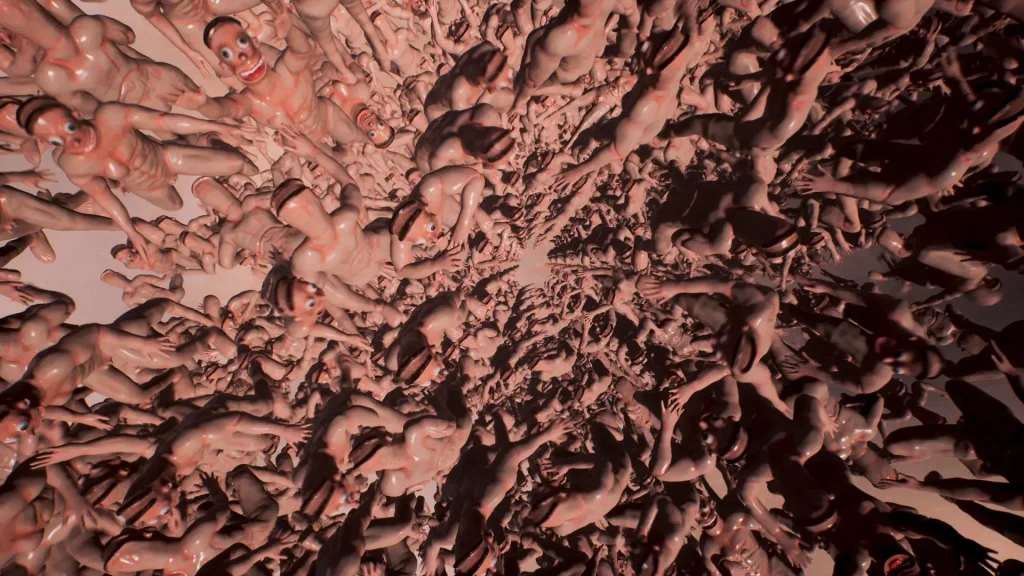
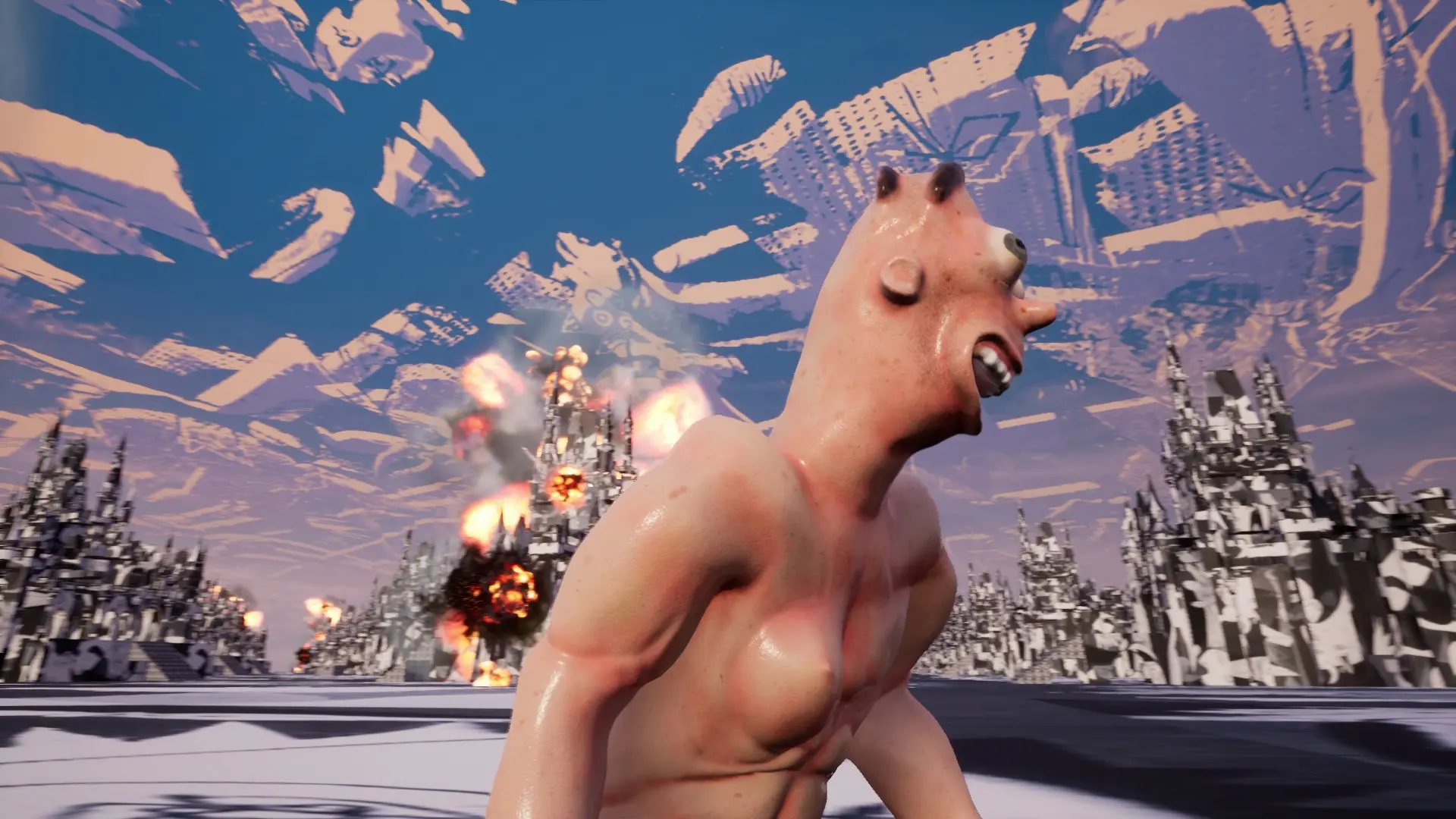
The first component to New Dawn is a multi–channel machinima projection which conflates popular confessional myths surrounding Near Death Experiences (NDE's), extraterrestrial encounters, UFO sightings, and New Age spirituality mixed up with conspiracy theories and revolutionary diplays of protest all of which are mapped onto the medieval, magical video game called Skyrim. How do we determine certainty or truth and remove doubt from the decisions we make about real–time and online experiential data; now that our lives are progressively more than ever entwined with virtual space. The purpose of this new moving image work is to question this new phenomenon and what are the political, social and economic repercussions for these new technological developments on our bodies and subjectivities. By doing this my work asks us to reflect on how we function as a society in response to these new spaces of interaction, how we might respond to the political dimensions of these expanded sites of inhabitation, and how they might also represent a more troubling scenario for the possibility of dissent or opposition in our media saturated culture.

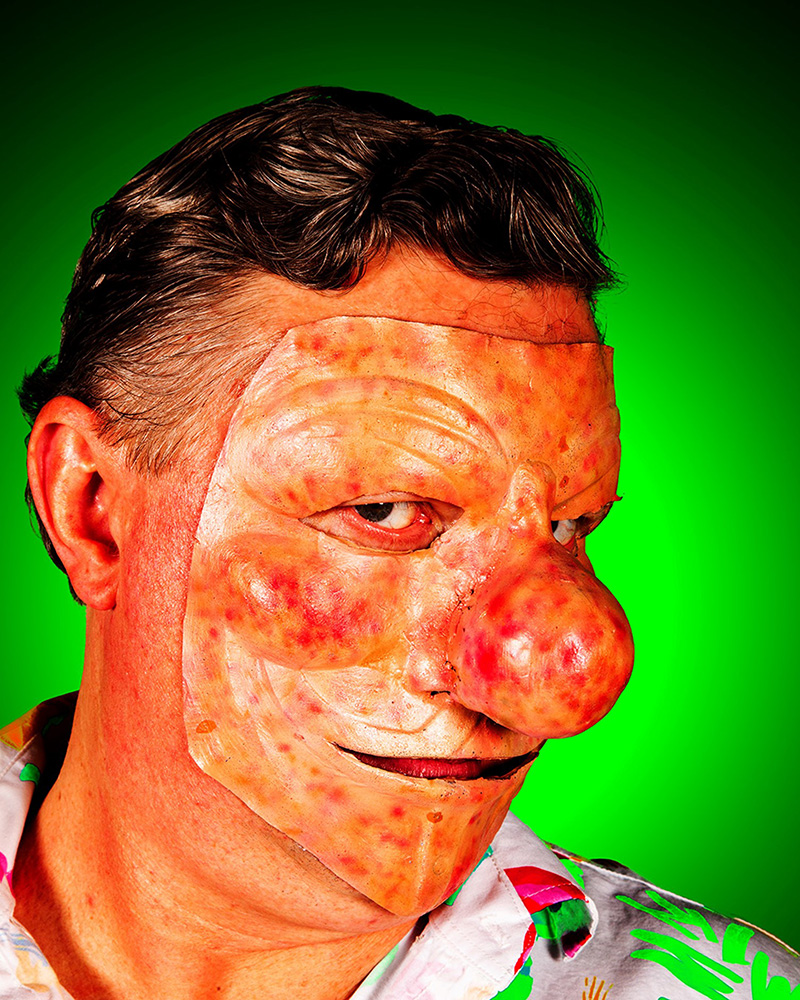
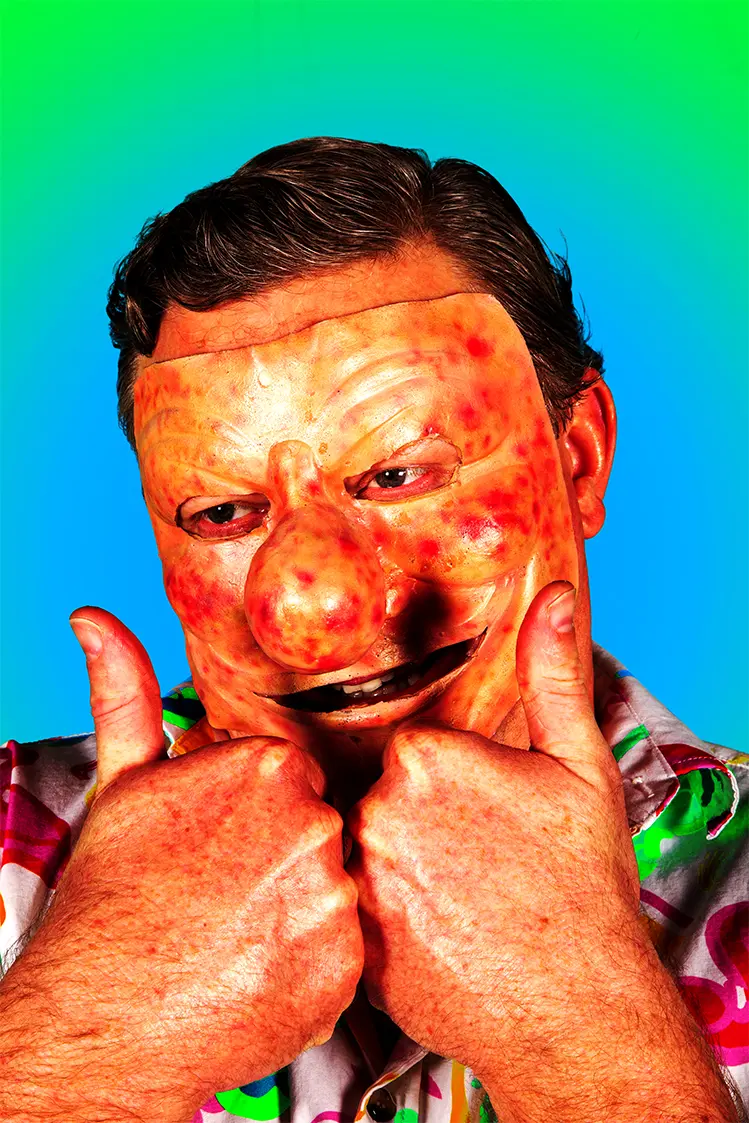
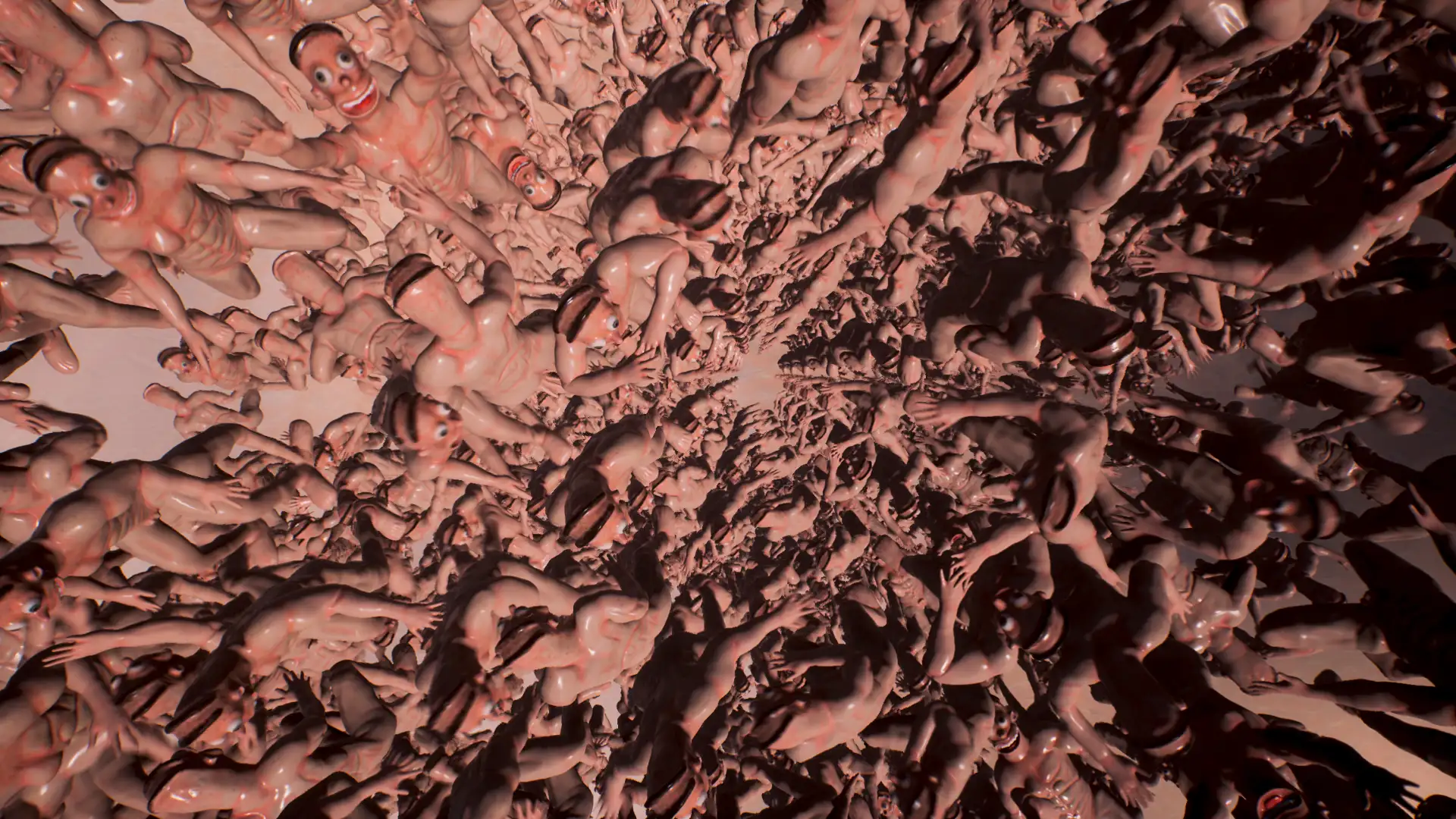
The second component to New Dawn is an ongoing series of sculptural works that have been in development since 2010. This new body of work will examine the mysterious nature of our reality by combining 3D printing technology software with traditional studio based sculptural practices such as mould making and air brushing techniques. All of my past video work, machinima, performance and installation practice all attempt to activate an immersive space from which to critically and creatively consider how reality and simulated environments both construct and reconfigure our ideas about the nature of identity. Unlike previous moving image works, these static sculptural works aim to primarily bring the body from a technological and virtual three–dimensional space into the real gallery space of the viewer.
The restless Chris Howlett uses his art to energetically pursue a wide range of conceptually and politically focused projects in divergent mediums. He is in fact an exemplary multi-tasker in a post-medium world and has essayed everything from installation, to performance, to sound art, to digital modding with a Quixotic willingness to engage with big themes and issues that would daunt many artists...Download Interview » Or read the article here»
At the end of the first decade of the twenty–first century, contemporary culture appears increasingly seduced and absorbed by apocalyptic reveries. Scientists are racing to cryo-preserve genetic material from animals and plant matter in underground bunkers, while filmmakers use the spectacle of computer-generated imagery (CGI) to speculate on the outcomes from dramatic climate change, that we are not yet...Download Interview » Or read the article here»
At the end of the first decade of the twenty–first century, contemporary culture appears increasingly seduced and absorbed by apocalyptic reveries. Scientists are racing to cryo–preserve genetic material from animals and plant matter in underground bunkers, while filmmakers use the spectacle of computer–generated imagery (CGI) to speculate on the outcomes from dramatic climate change, that we are not yet ready to confront in reality. Media outlets and politicians encourage fear as the predominant emotion in contemporary life, capitalising on our unease regarding health, national security and prosperity. As a culture, we have become deeply affected by what we crave and fear, whether by mediatised images of violence and disaster, or transgressions in social and sexual difference. Chris Howlett's recent work reflects on these cultural anxieties and the symbolic language...Continue »

CACSA Projects 2010 Project#9 presents Vocal Thoughts curated by Peter McKay was an exhibition that focused on various forms of mental unrest, bringing to the fore exchanges that are largely left unspoken, or sometimes engaged with a closed mind. Blurring the line between public and private, internal dialogue and social exchange, this exhibition provides an opportunity to form a more intimate perspective on the individual experience than we may be familiar with in a world fixated on positive thinking and public face. Accessing and appraising a spectrum of emotions and complemented with insights into the medical, political and economic frameworks that have evolved to manage negative feelings at times this exhibition leaves little to the imagination...Continue »
The 4th edition of VIDEOHOLICA International Video Art Festival took place in Varna between August 10th and August 18th, 2010 accompanying AUGUST IN ART International Biennial of Visual Arts.
During the festival 9-day duration, according to the VIDEOHOLICA 2010 motto 'KEEP THE ILLUSION ALIVE', various video selections and projects describing diverse concepts and interpretations of the term 'illusion' as a phenomenon discovered and studied with the techniques of video art will be screened and presented.
VIDEOHOLICA 2010 main program, which includes over 150 video art works (selected from more than 500), part of which thematically divided into the selections 'East Asia', 'Dance' , 'BG', will be presented in a series of evening screenings in four different open-air places, such as the inner yard of the Varna Archaeology Museum, the back yard of the Varna Puppet Theatre, the Rakovina open-air stage and the outside space of Music Cafe LOOK.
An international jury composed by Vesselina Sarieva (cultural activist, Bulgaria), Dinu Li (artist, UK / China), Anthony Bannwart (artist, Switzerland), Yovo Panchev (curator and artist, Bulgaria), Kera Nagel (video performance artist, Germany), André Aspelmeier (video performance artist, Germany) and Alessandra Arno (video artist and curator, Italy) will debut at the festival choosing the VIDEOHOLICA 2010 Representative Selection...Continue »
Machinima artist Friedrich Kirshner talks with Oiliva Porgand, a member of the QUT's Machinima Curation Team.
How would you define Machinima in its present form?
Machinima in its present form is probably best defined as 'Filmmaking using Video Game Technology'. It's a term often used by Paul Marino, the Director of the Academy of Machinima Arts and Sciences, and I feel it encapsulates the current state of Machinima quite well. Most works people will stumble upon will use settings within existing games to tell a story.
How important do you think the notion of narrative is hen constructing a Machinima work? Is it possible to make Machinima without a narrative?
Narrative is a broad term. Today, we design everything from Computer Operating Systems to elevator controls with 'narrative' in mind, so it's hard to say that time:based work like Machinima movies can have no narrative. Most Machinima movies relate to a very classical idea of narrative, with character arcs, dialogue, story development and so on. But of course there are the odd ones out: films that are based on mood, visual expression, or document special events, like protests or performances in Multi:player game environments. I think the term narrative is as much applicable to Machinima as it is to Animation in general...Continue »

When thinking about how to address the complex political, social and aesthetic implications of Chris Howlett's exhibitions, I had something of a flashback of my own and was drawn to revisit Andrew Feenberg's Critical Theory of Technology (1991). As I recalled, this was one of the first books I had read that specifically engaged capitalist, socialist, economic and cultural viewpoints in order to hypothesise on the role and functions of technology in our near future. In what turned out to be a key text on the subject, Feenberg provided an ambitious and challenging scenario for developing a democratically driven, and politically responsible approach to how advanced technologies like computing might be harnessed for egalitarian purposes. I was curious to see how Feenberg's ambitions from nearly two decades ago might have manifested themselves in Howlett's own explorations into the complicated interface between technology, art, and social and political practices in the early 21st Century.
Feenberg believed technology to be the defining issue of modernity. As a major component of contemporary society it was intimately connected to politics, economics, culture, to all aspects of social and personal life. And although he argued that the processes of labour, science and technology were constituted as forms of domination to both nature and human beings, he advocated that these processes could be democratically transformed as part of a broader program of radical social transformation...Continue »
Human Vs Human is a sliced and cropped image still from a video artwork which uses various autobiographical war veteran stories from online social networking sites and live recorded 3D game play from first person shooter games to create alternative narratives which subvert and intensify their original meaning. The video work inserts the real life personal narratives of soldiers into a virtual gaming world cut with pop music, in-game narratives and atmospheric sound tracks to create a disturbing, conflated look at...Continue »
The title of Chris Howlett’s ongoing series of exhibitions comes from the description of World War II propaganda posters as ‘Weapons on the Wall’3. This phrase indicates the extent to which such wars are not just about fighting the enemy, but also about waging a war for people’s hearts and minds. Support for a cause cannot be assumed, but must be won through reason, inspiration emotion and, if necessary, deception. Seen in this light, propaganda can be seen as advertising for an ideology; a very particular type of hype, designed to ‘work on people until they are addicted to us’4.
Today, the tactics of propaganda are so deeply imbedded within the fabric of our culture that they are indistinguishable across the fields of media reporting, advertising, cinema or reality television.
It is in this context that Chris Howlett attempts to explore the relationships between art, politics and propaganda. The earlier editions of Weapons on the Wall drew heavily on representations and reporting of September 11, the US invasion of Iraq and the resulting protests against US imperialism. They presented an eclectic array of hand-drawn protest placards, digital prints, paintings of magazine covers ranging from TIME Magazine to Art in America and videos including news reports from ‘ground zero’ of September 11, the cartoon violence of the Simpsons, episodes from M*A*S*H and imagery from internet hate sites...Continue »
The "Hire Me Out" project took place in Los Angeles and on campus at the California Institute of the Arts from 1999 till the end of 2000. It was a time based conceptual art performance project that used a situational approach to examine the artist "labor" as a form of "artwork" and brought into question the role of the artist as Author...Continue »